Dating, with more intention
11 Alternatives to Dating Apps That Actually Work (2026)

The alternatives to dating apps that most often lead to relationships are introductions through friends, shared activities you repeat every week, and work or school circles. In The Knot's 2024 survey of engaged couples, 16% met through friends, 15% at college and 10% at work. A matchmaker does the introducing for you.
Alternatives to dating apps at a glance
Use the comparison below to choose a channel you can sustain. Time per week is our estimate for planning your routine. Prices checked October 2026. Survey findings describe how particular groups met; they do not predict your chance of a relationship. Use the source links to distinguish survey evidence from descriptions of activities and services.
| Alternative | Cost | Time per week (our estimate) | Best for | Evidence and source |
|---|---|---|---|---|
| Introductions through friends | Free | Low | People with a social circle | 16% of engaged couples; The Knot 2024 |
| A matchmaker | Tawkify NYC from about $4,900; LUMA $20,000–$250,000+ | Low, plus dates | Busy people seeking screening | Published prices and sources; not a success rate |
| Run clubs and sports leagues | Free options; Volo mostly $100–$165 per season | 2–4 hours | Active people | NYC formats; no relationship rate established here |
| Classes and workshops | $25 salsa drop-in to $110 at Home Cooking New York | 2–3 hours | People who like structure | NYC examples; no relationship rate established here |
| Volunteering | Free | 2–4 hours | People who value shared purpose | NYC community options; no relationship rate established here |
| Dinners with strangers | Timeleft X $19.99–$62.99, plus meal; periods not shown | One evening | Newcomers and quieter conversationalists | NYC dinner format; App Store prices |
| Speed dating and singles events | Ticket per event | One evening | People seeking several introductions | NYC event formats; no relationship rate established here |
| Religious and community groups | Free to membership fee | Varies | People who value shared faith | 31% of ever-users of dating sites or apps (n = 772) rate shared religion very important; SSRS 2026 |
| Work, alumni and professional networks | Free | Varies | People with existing professional connections | 10% of engaged couples met at work; The Knot 2024 |
| A dating coach | $120 for an NYC session; $3,600 for a four-month virtual program; $4,985 for a remote 1:1 program | About 1 hour | People seeking help with their approach | One NYC coach and two remote programs; own-page prices |
| App-light: one app with limits | Free tier | 15 minutes a day | People who want less app time | Hinge: eight free likes daily; not a success measure |
Why do people look for alternatives: dating app fatigue?
Dating app fatigue is the tiredness and lost motivation that come from long stretches of swiping and messaging that rarely turn into dates. It can make opening an app feel like another task, even when you still want a relationship.
A Forbes Health/OnePoll survey of 1,000 recent app users in March–April 2024 found that 78% felt emotionally, mentally or physically exhausted by dating apps at least sometimes. The figure was 80% for millennials and 79% for Gen Z. Respondents reported about 51 minutes a day on apps.
The January 2026 SSRS survey, gives a more mixed picture. Among ever-users of dating sites or apps (n = 772), 20% described the effect on their dating as mostly negative, 47% as neither positive nor negative, and 33% as mostly positive. The safety question used a different base: all US adults (n = 2,012). In that group, 55% of women and 30% of men said meeting an online match in person was not safe.
If you feel worn down, decide which part is draining you: browsing, starting conversations, arranging dates or uncertainty about intentions. An offline activity changes the setting; a coach changes the support; a matchmaker changes who handles introductions. You can choose one change without abandoning every useful connection already underway.
How do couples actually meet?
The Knot’s 2024 study found that 27% of engaged couples met through dating apps, 16% through friends, 15% at college or graduate school, 10% at work and 5% through social networks. The sample included 7,856 US couples engaged between January 1 and November 8, 2024, drawn from Knot and WeddingWire members.
The Stanford How Couples Meet and Stay Together findings concern a different population. About 39% of heterosexual couples who met in 2017 met online, compared with 22% in 2009. Meeting online overtook introductions through friends around 2013.
Pew’s July 2022 survey found that 10% of partnered adults met their partner online. That includes established relationships, while The Knot focuses on newly engaged couples. Different populations and time periods explain why these percentages should not be combined into one chart of everyone’s dating life.
For us, alternatives means adding channels to apps. The evidence gives friends and existing circles a place in your plan while recognizing that apps also lead to relationships.
1. How can friends introduce you to someone?
A friend introduction is a personal set-up through someone who knows you. The Knot found that 16% of engaged couples in its 2024 sample met through friends. Asking is free, and the first step can be a short conversation rather than a public announcement.
Try these three lines in your own words:
- “I’m open to meeting someone who wants a relationship.”
- “If you know someone you think I’d enjoy, would you ask whether they’re open to an introduction?”
- “A group dinner would feel comfortable, and there’s no pressure if nobody comes to mind.”
Give your friend a useful sense of what matters to you without handing over a long checklist. Let both people agree to the introduction before sharing contact details. Afterward, thank your friend for making the connection; you can decide privately whether you want another date.
2. When does a matchmaker make sense?
A matchmaker handles the search and introduces candidates against an agreed brief. Tawkify’s NYC page says packages start around $4,900. LUMA publishes a $20,000–$250,000-or-more range for customized full-service matchmaking, checked October 2026.
The appeal is practical: you pay someone to organize introductions rather than doing every part yourself. It can suit a busy schedule or a wish for screening before a date. You still need time to meet people, give feedback and decide whether there is a connection.
Compare what NYC matchmakers charge, including match counts, membership length and cancellation rules. Ask who handles your search and whether candidates are paying clients or free members. For the larger decision, read is a matchmaker worth it.
3. How do run clubs and sports leagues help you meet people?
A recurring sports group gives you an activity and repeated contact with the same community. Harlem Run’s published schedule includes Monday at 7 p.m., Tuesday at 6:30 a.m. and Wednesday at 6 p.m., checked October 2026.

Front Runners New York welcomes LGBTQ+ people and allies, with membership at $30 a year. Most Volo NYC leagues cost $100–$165 per player for a season. Compare the full season commitment with a free group before choosing.
Pick an activity you want to do even if you do not meet a date immediately. Arrive with enough time to say hello, learn names and join the conversation afterward. A regular group offers opportunities to become familiar without treating every session as a singles event. Our guide to run clubs and other ways to meet in NYC covers the local options.
4. Which classes and workshops should you try?
A class gives a group a shared task and a natural topic of conversation. NYC examples checked October 2026 include Nieves Latin Dance Studio’s $25 drop-in, with a first 101 class free, Home Cooking New York at $110 and The PIT’s $35 improv drop-in.
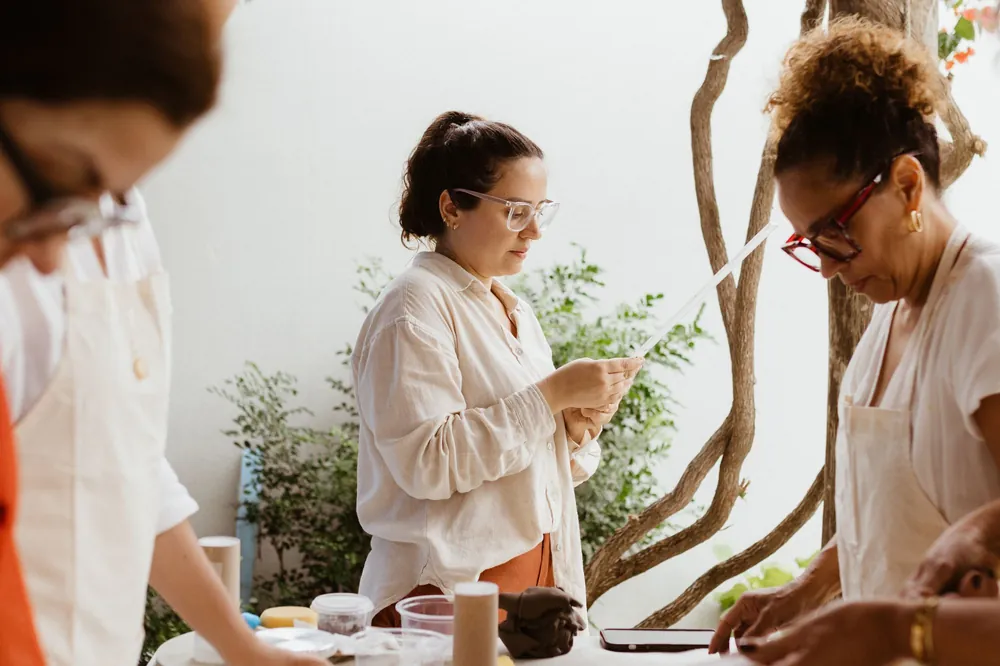
Choose a class you enjoy even if you make friends rather than meet a date. Ask whether it is a one-off workshop or a recurring course; that affects your budget and repeated contact.
Outside New York, look for similar formats through local studios and community programs.
5. Can volunteering expand your social circle?
Volunteering is a way to work alongside people around a shared purpose. New York Cares uses a short online orientation. NYC Parks’ It’s My Park days offer free opportunities to participate, checked October 2026.
Choose a cause and task you can support consistently. A shift has a purpose beyond meeting people, so follow the organizer’s expectations and let conversation develop around the work. Repeated participation gives you a reason to reconnect without needing to turn the first interaction into a date.
Keep the setting comfortable for everyone. An invitation to continue a conversation should be easy to decline. A wider circle of friends and acquaintances can be a useful result in itself.
6. What are dinners with strangers and social clubs?
A dinner format gathers a small group around a meal rather than a dating profile. Timeleft uses a quiz to match tables of four to six. NYC dinners run Wednesdays and Fridays at 7 p.m.; singles dinners run Tuesdays at 7 p.m., checked October 2026.
The US App Store listing shows Timeleft X purchases of $19.99, $46.99 and $62.99. Billing periods are not shown, and you also pay for your meal. Timeleft’s App Store listing describes it as a friendship app with more than three million users.
Thursday now runs singles events and says it operates in more than 150 cities. Its dating app closed, with the closure announced January 9, 2025. Bumble’s Plans arranges small-group drinks and dinners. Meetup groups offer another route to social plans, including free options.
7. What happens at speed dating and singles events?
Speed dating arranges short conversations with several people, with matches based on mutual selection. The format aims for balanced numbers and lets you meet several potential dates in one evening. Tickets are priced by event.
Check the audience, format and mutual-match process before buying. For local options, see speed dating in NYC. Tinder Events listed 57 cities, including New York, on October 30, 2026. Photo Verification is needed for full access in the app. An app can therefore be a route into an in-person event even if you want less time browsing profiles.
8. How can religious and community groups fit?
A faith or community group brings people together around shared beliefs or participation. SSRS found that 31% of people who had ever used dating sites or apps (n = 772) considered shared religious beliefs very important in 2026. The figure was 38% for women and 25% for men.
If shared faith matters to you, consider gatherings you would value as part of your life. Costs range from free participation to membership fees. Treat the community as a community, with room for friendships and service as well as dating. Our guide to Jewish matchmaking in NYC explores another introduction route for Jewish singles.
9. What about work, alumni and professional networks?
Existing professional and school networks connect you through a shared context. The Knot found that 10% of engaged couples in its 2024 sample met at work. Another 15% met at college or graduate school; that is not a measured success rate for alumni events.
Alumni gatherings and professional communities can broaden your circle beyond immediate colleagues. Check your employer’s policy before pursuing a workplace relationship, and consider reporting relationships and boundaries. A shared workplace is a reason to be considerate about invitations and refusals. Keeping participation comfortable matters even when you believe the interest is mutual.
10. What does a dating coach do?
A dating coach helps you work on your approach, rather than supplying a search for candidates. Prices checked October 2026 include Trevor Kuhn’s $120 for a 75-minute first session in NYC. Logan Ury’s four-month all-virtual program costs $3,600. Dating by Blaine’s remote 1:1 team program costs $4,985; no length is published. The latter two are remote options, rather than in-person NYC coaches.
Coaching may fit when you want help preparing for dates, communicating or deciding what you are looking for. Ask what the sessions cover and how much practice happens between them. Compare dating coaches in NYC by session length and program scope rather than treating every price as an hourly fee.
11. How can you use one app with limits?
An app-light approach keeps one dating platform while setting your own time boundary. Hinge says free users receive eight likes a day. You do not have to use every like or keep browsing once the time you set is over.
Coffee Meets Bagel sends a curated batch at noon. Marble’s App Store description puts setting a date before messaging and lists Basic at $15 a month.
Try the table’s suggested 15-minute daily boundary and leave space for in-person plans. Read about apps built for serious relationships or compare Hinge vs Bumble if you want to keep one app. Choose the format you are willing to use with intention.
Alternative dating apps (if you still want an app)
“Alternative dating” can also mean a subculture-focused community or a different introduction format. The options below serve different purposes: goth dating, open-minded dating, AI introductions and social dinners are not interchangeable. All statuses and prices reflect October 30, 2026.
| App or platform | What is different | Price | Status checked Oct. 30, 2026 |
|---|---|---|---|
| DarkHeart | Goth/alternative dating; App Store description: “It begins with the invitation of a Black Rose” | Free to download, paid tiers from $19.99/week | Live; DARKHEART LLC; version 3.8.0, Oct. 19, 2026 |
| AltScene | Alternative dating site | Free, according to the site | Site live |
| Feeld | Open-minded and non-monogamous community | Majestic: 30 days, $29.99 | Live |
| Sitch | AI matchmaker; says real people review every profile | One setup $24.99 / $34.99; three $89.99 | Live in NYC, SF, LA, Chicago and Austin |
| Keeper | Web-based AI matchmaking; as of October 2026, the company says one in ten first dates leads to marriage; no method published | Free tier; per-match fee not published | Live; mainly US, Canada and UK |
| Timeleft | Dinners with strangers | Timeleft X $19.99–$62.99; meal extra; periods not shown | Live in NYC |
Feeld says its community has 14 million registered accounts, citing Sensor Tower in February 2026. That is a company-reported audience claim, not a count of active local matches.
Choose a community that fits what you want, then examine the purchase. A paid setup, membership and dinner buy different things. For a subculture community, look at DarkHeart or AltScene. For introductions handled by a platform, compare Sitch and Keeper. For a social evening around a meal, Timeleft offers another format.
How do you choose an alternative to dating apps?
Ask three questions: how much time can you give, what can you spend comfortably, and how much screening do you want someone else to handle? The comparison table helps turn those answers into a practical next step.
If money is tight, begin with a friend introduction or free community activity. If you want a scheduled evening, consider a class, dinner or singles event. If searching is the part you want to hand over, compare matchmaker proposals. If the difficulty is your approach, look at coaching.
Choose one recurring activity and, if useful, one introduction channel. Give yourself permission to enjoy the activity without measuring every conversation against a relationship goal. Then review whether the plan fits your energy, budget and interest in meeting people.
Frequently asked questions
What is the best alternative to dating apps?
Start with friends if you have a circle willing to introduce you: 16% of engaged couples in The Knot’s 2024 sample met that way. Recurring activities and existing communities add opportunities. The best fit depends on the time and money you can sustain.
How do I meet someone without dating apps?
Ask a friend for an introduction, join a recurring activity you enjoy, or try a social dinner or singles event. Choose a format where conversation is welcome. Return because you like the activity, and let interest develop without expecting every meeting to become a date.
Is matchmaking better than dating apps?
Matchmaking can save searching and organizing time, but it costs money and still requires your participation. The better fit depends on the help you want. Read is a matchmaker worth it before choosing a service.
What are some good apps for alternative dating?
DarkHeart and AltScene focus on alternative dating communities. Feeld serves open-minded daters, while Sitch and Keeper offer AI matchmaking formats. Timeleft organizes social dinners. Compare the community and purchase terms; these platforms do not all serve the same relationship goals.
What is dating app fatigue?
Dating app fatigue means tiredness and lost motivation after extended swiping and messaging, especially when little turns into dates. In a 2024 Forbes Health/OnePoll survey, 78% of recent app users reported feeling exhausted by apps at least sometimes. A change of pace may help you reassess your routine.