Dating in Your 30s: What Changes and How to Meet Someone
Dating in your 30s is more intentional: you know what you want, your social circle is smaller, and marriage and children come up sooner. Americans now first marry at a median age of 28.4 (women) and 30.8 (men), so being single in your 30s is common. Meet people through friends, interests and one serious app, and raise life plans early.

This guide is for anyone dating over 30: never married, recently out of a long relationship, or dating as a single parent (we cover that in dating as a single parent). It gives the numbers first, then practical advice for women and men, and the New York picture.
How is dating different in your 30s (vs your 20s)?
Dating at 30 differs from dating at 25 in six practical ways. The table sums them up, with a sourced number wherever one exists.
| Area | In your 20s | In your 30s |
|---|---|---|
| Social circle | Large, single friends, easy group nights out | More friends are coupled; fewer chance meetings, so introductions need asking for |
| Apps | 53% of adults under 30 have used a dating site or app (Pew, 2022) | 37% of adults 30–49 have; many people have tried apps and want a second route |
| Timelines | Marriage and children feel distant | Both come up within the first few dates |
| Clarity | Still working out what you want | Most people know their priorities and their dealbreakers |
| Relationship history | Few long relationships yet | 77% of adults 38–43 have lived with an unmarried partner (Pew, 2026) |
| Dating pool | 47% of adults under 30 are single (Pew, 2022) | 21% of adults 30–49 are single, but they are more often looking for something serious |
Sources: Pew, online dating, 2023; Pew, cohabitation, 2026; Pew, single Americans, 2023.
The biggest change, in our view, is less patience for ambiguity. In your 20s, a few months of "seeing where it goes" costs little. In your 30s, people want to know sooner whether the other person wants the same future, and that is a healthy instinct, not desperation.
Your history also changes the conversation. Most people you meet in their 30s have had at least one serious relationship, and many have lived with a partner. That brings more self-knowledge and sometimes more caution. Ask about what someone learned, not about every detail of their past.
What percentage of people in their 30s are single?
Adults aged 30 to 49 are the least likely age group to be single: 21% in a July 2022 Pew Research Center survey, compared with 47% of adults under 30 and 30% of all adults (Pew, 2023).
A broader measure shows more people without a partner at home. In Pew's analysis of 2023 Census data, 42% of adults aged 25 to 39 did not live with a spouse or partner.
Being single at 30 or 35 is also normal because marriage comes later. In 2025, the median age at first marriage was 28.4 for women and 30.8 for men, up from 21.1 and 23.5 in 1975, according to the U.S. Census Bureau. Half of American men marry for the first time after 30.
Dating in your 30s as a woman
Many women find their 30s the clearest decade for dating. Careers are more settled, you know what kind of partner fits your life, and you are less willing to spend months on someone who is vague about what he wants.
The "timeline talk" arrives sooner. If you want marriage or children, it is reasonable to say so early, without apology. A man who wants the same future will be relieved to hear it; one who does not will tell you, and you have saved time. If marriage is your goal, our guide on how to find a husband covers it step by step.
If you want biological children: what the guidance says
Fertility is a medical question, so here are the figures from medical bodies, each with its own source, and a reminder to talk to your doctor about your own situation.
The American College of Obstetricians and Gynecologists (ACOG) says fertility starts to decline by 30 and declines faster from the mid-30s. ACOG estimates that about 1 in 4 women in their 20s and early 30s will conceive in a given menstrual cycle, and about 1 in 10 by age 40. It recommends seeing a doctor after six months of trying if you are over 35.
The American Society for Reproductive Medicine (ASRM) puts the chance per cycle at 20% at age 30 and under 5% by 40. It says fertility "gradually declines in the 30s, particularly after age 35."
On egg freezing, ACOG says there is not enough research to recommend it routinely as a way to delay childbearing. A 2024 meta-analysis of 10 studies and 8,750 women found that 11.1% returned to use their frozen eggs. Of those who returned, 28% had a live birth: 52% of women who froze at 35 or younger, and 19% of those who froze at 40 or older.
These are averages across many women, not a forecast for you. The useful dating step is simpler: if biological children matter to you, say so early, and look for a partner who wants the same thing on a similar timeline. Your doctor can tell you what the numbers mean for your own health.
Dating in your 30s as a man
Men marry later than women, at a median age of 30.8 in 2025, so many men in their 30s are deciding whether they are ready to get serious. That decision is the most important part of dating in your 30s as a man.
Women in their 30s screen for one thing above all: clarity about intentions. A man who says early what he wants, whether that is marriage, children or simply a committed relationship, stands out. A man who keeps things vague for months usually loses a woman's interest, however good the dates are.
Practical habits help. Plan the date rather than asking "what do you want to do?", follow up when you said you would, and be honest if you are not looking for something serious. For the basics of meeting people, read how to get a girlfriend; if you are ready for marriage, see how to find a wife.
Dating at 35 as a man also means meeting women who have heard every line. Effort shows in small things: remembering what she told you, choosing a place where you can talk, and asking a second question instead of waiting for your turn to speak.
How to meet someone in your 30s
How to date in your 30s starts with where you look. When a social circle shrinks, chance meetings drop, so you need routes that put you in front of new single people regularly. Seven that work:
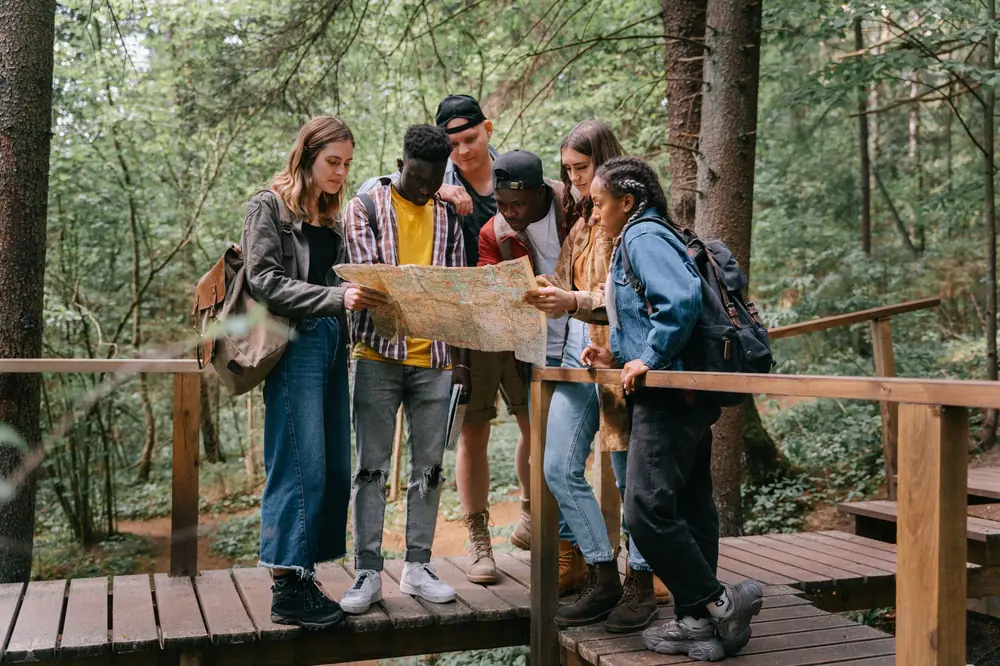
- Friends' introductions. Ask directly: "Do you know anyone you would set me up with?" Most people never ask, and most friends never offer.
- Recurring interest groups. A running club, choir or class that meets every week lets you get to know people slowly.
- Work-adjacent events. Industry talks, alumni events and conferences, not your own office.
- Faith or cultural communities. Shared values come built in.
- One or two apps. Pick the apps where people want relationships, and use them well rather than widely.
- Speed dating. Ten short conversations in an evening; see speed dating in New York.
- A matchmaker. Someone else does the searching and screening for intentions.
By 2017, online dating had become the most common way couples met, but not the only one. Among heterosexual couples who met in 2017, 39% met online, 27% in a bar or restaurant and 20% through friends, according to Rosenfeld, Thomas and Hausen (PNAS, 2019). The categories overlap, since some couples met online and through friends.
Whichever routes you choose, make them regular. One new social setting a month and one well-run app beat a burst of activity followed by months of nothing. Consistency is what turns a smaller social circle into a steady flow of new people.
Best apps in your 30s
The best dating apps for people over 30 are the ones built around profiles and conversation rather than endless swiping. We compare them in dating apps for serious relationships.
Timelines: marriage, kids and the 3-6-9 rule
Is it too late? No. In 2024, 24% of first marriages in the U.S. happened at ages 30 to 34, 11% at 35 to 39 and 12% at 40 or older, according to Bowling Green State University's NCFMR.
Researchers have also looked at age at marriage and divorce risk. Using national survey data from 2006 to 2010, sociologist Wolfinger found that each extra year of age at marriage cut the odds of divorce by 11% until about 32; after that, the odds rose about 5% a year. He concluded that the late twenties were the lowest-risk time to marry (Institute for Family Studies, 2015). It is one analysis of averages, and it says nothing about any particular couple.
What is the 3-6-9 rule?
The 3-6-9 rule is a dating framework that went viral on TikTok in 2025. Bustle explained it in September 2025. It is a rule of thumb, not research.
| Months | Stage | What to notice |
|---|---|---|
| 0–3 | Honeymoon | Chemistry is high; enjoy it, but watch consistency |
| 3–6 | "Rocky and real" | First disagreements and real habits appear |
| 6–9 | Decide | You know enough to decide whether it has a future |
Raise children and marriage plans by the third date. Do not assume: 47% of U.S. adults under 50 without children said in 2023 that they are unlikely ever to have them, up from 37% in 2018 (Pew, 2024). A simple "I'd like kids someday. How about you?" is enough. If you are a few years further along, read our guide to dating in your 40s.
Dating in your 30s in New York
In New York City, single in your 30s is the norm. 45.4% of NYC residents aged 15 and older have never married, compared with 34.8% nationally, according to the 2024 American Community Survey.
New Yorkers also marry later. Women in New York State had a median age at first marriage of 30.4 in 2024, tied for fourth highest in the country, according to NCFMR. The national figure for women in the same survey was 28.8.
The upside is a large pool of single people your age. The downside is choice overload and busy schedules. For more data, see our NYC singles statistics; for the city's dating culture, read dating in NYC and how to meet someone in NYC.
Mistakes people make dating in their 30s
- Over-filtering. Every extra filter shrinks the pool. Check yours with the dating standards calculator and keep a short list of real non-negotiables.
- Interviewing instead of dating. Asking about life plans early is good; running a checklist over drinks is not. Have fun first, then ask the important questions.
- Staying in a situationship. Months without clarity cost more in your 30s. If you are unsure what you are in, read what is a situationship.
- Comparing to friends' timelines. Your friends' weddings tell you nothing about your own path, and the numbers above show how many people marry after 30.
Most of these mistakes come from the same place: treating dating as a test you are failing instead of a search you are running. A search has a method. Decide what you want, choose two or three ways to meet people, and review every couple of months what is working.
Frequently asked questions
Is dating in your 30s harder?
It is different rather than harder. Adults 30 to 49 are the least likely age group to be single (21% in Pew's 2022 survey), yet 42% of adults 25 to 39 do not live with a partner. In our view, it gets easier once you date with clear intentions.
How do I start dating in my 30s if I've never dated?
Start small and steady: tell two or three friends you are open to introductions, join one recurring group around an interest, and set up one app with a clear profile. Plan short first dates, such as coffee or a walk, and treat each one as practice, not a verdict. Our guides on how to get a boyfriend and how to get a girlfriend cover the first steps.
Is 35 too late to find love or get married?
No. In 2024, 24% of first marriages in the U.S. happened at ages 30 to 34, 11% at 35 to 39 and 12% at 40 or older, according to Bowling Green State University's NCFMR. Together that is 47%: almost half of first marriages now happen at 30 or later.
What are the best dating subreddits for people over 30?
r/datingoverthirty is the best-known Reddit community for people dating in their 30s. It is useful for perspective and stories; treat individual posts as anecdotes rather than advice.
What is the 3-6-9 rule?
The 3-6-9 rule is a viral TikTok framework: the first three months of a relationship are the honeymoon, the next three are when it gets "rocky and real", and by about nine months you can decide whether it has a future. It is a rule of thumb, not research.